

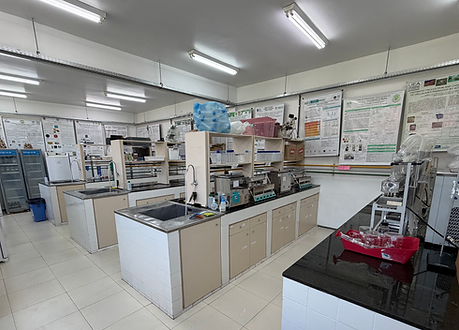
Chemical Analysis Center
The Chemical Analysis Center of the University of the State of Amazonas (CAQ/UEA) focuses on providing analytical chemistry services, particularly liquid and gas chromatography techniques, including the use of a portable gas chromatograph coupled with a mass spectrometer. The Center also employs spectrometric techniques, including UV–Vis and FTIR spectroscopy, and operates an elemental analysis platform comprising ICP-OES, ICP-MS, and a CHNS-O analyzer for the detection and analysis of metals in solid and liquid samples.


Equipment
The Chemical Analysis Center of the QAT Research Group currently houses medium- and high-complexity analytical equipment across its laboratories.
1. Gas Chromatograph Coupled to a Triple Quadrupole Mass Spectrometer (GC–MS/MS), Equipped with Liquid Injection, Headspace Sampling, Thermal Desorption, and SPME:
The Gas Chromatograph–Triple Quadrupole Mass Spectrometer (GC–MS/MS) is a highly sensitive and selective analytical instrument used for the analysis of environmental, biological, food, and industrial matrices. The triple quadrupole system enables analyses using Multiple Reaction Monitoring (MRM), providing high analytical precision and low detection limits, even in complex samples.
The injection system is highly versatile and includes different modules:
-
Liquid Injector: used for the direct analysis of solutions and extracts.
-
Automatic Headspace Sampler: enables the analysis of volatile compounds present in the gas phase above liquid or solid samples without direct contact with the sample matrix, thereby reducing potential interferences.
-
Thermal Desorber: designed for the analysis of compounds adsorbed onto sampling tubes and widely used for air quality monitoring and gaseous emissions analysis.
-
SPME (Solid-Phase Microextraction): a technique that uses a coated fiber to extract and concentrate volatile or semi-volatile analytes. It is particularly suitable for environmental, food, and biological samples and does not require the use of solvents.
2. Gas Chromatograph Coupled to a Barrier Discharge Ionization Detector (BID) – 1:
The Gas Chromatograph Coupled to a Barrier Discharge Ionization Detector (GC-BID) is a high-precision instrument designed for the analysis of gases, including light gases (O₂, N₂, CO, CO₂, H₂, CH₄, etc.) and simple organic compounds. The BID detector is based on a helium plasma, which emits intense ultraviolet radiation capable of ionizing a wide range of molecules, providing high sensitivity with detection limits in the ppb (parts per billion) range.
The GC-BID combines the separation efficiency of gas chromatography—which separates sample components according to differences in volatility and interactions with the column’s stationary phase—with the versatility of the BID detector, which enables the detection of a broad range of compounds, including permanent gases and hydrocarbons, without requiring multiple compound-specific detectors or reagents.
Its versatility makes it particularly suitable for:
-
Air quality monitoring and detection of atmospheric pollutants.
-
Determination of dissolved gases in natural waters, groundwater, and wastewater.
-
Monitoring of industrial processes and gaseous emissions.
-
Analysis of biogas and fuel gases in renewable energy research.
-
Studies of carbon and nitrogen biogeochemical cycling in Amazonian ecosystems.
Due to its high sensitivity, broad linear response range, and near-universal detection capability, the GC-BID is a strategic analytical tool for environmental monitoring laboratories and advanced chemical research. It enables rapid and accurate analyses with minimal sample preparation—essential characteristics for the integrated monitoring of air, water, and soil within ProQAS/AM, as well as for studies of gas dynamics in tropical ecosystems.
3. Gas Chromatograph Coupled to a Barrier Discharge Ionization Detector (BID) – 2:
The Gas Chromatograph with a Barrier Discharge Ionization Detector (GC-BID) is a high-precision instrument designed for the separation and quantification of volatile compounds and permanent gases, including light gases (O₂, N₂, CO, CO₂, H₂, CH₄, etc.) and simple organic compounds. The BID detector is based on an electrically excited helium plasma, which emits intense ultraviolet radiation capable of ionizing a wide range of molecules, making the system highly sensitive and nearly universal, with detection limits in the ppb (parts per billion) range.
The GC-BID combines the separation efficiency of gas chromatography—which separates sample components according to differences in volatility and interactions with the column’s stationary phase—with the versatility of the BID detector, enabling the detection of a broad range of compounds, including permanent gases and hydrocarbons, without requiring multiple compound-specific detectors or reagents.
Its versatility makes it particularly suitable for:
-
Air quality monitoring and detection of atmospheric pollutants.
-
Determination of dissolved gases in natural waters, groundwater, and wastewater.
-
Monitoring of industrial processes and gaseous emissions.
-
Analysis of biogas and fuel gases in renewable energy research.
-
Studies of carbon and nitrogen biogeochemical cycling in Amazonian ecosystems.
Due to its high sensitivity, broad linear response range, and near-universal detection capability, the GC-BID is considered a strategic analytical tool for environmental monitoring laboratories and advanced chemical research. It enables rapid and accurate analyses with minimal sample preparation—essential characteristics for the integrated monitoring of air, water, and soil within ProQAS/AM, as well as for studies of gas dynamics in tropical ecosystems.
4. Gas Chromatograph Coupled to Flame Ionization and Thermal Conductivity Detectors (FID and TCD), with Headspace Sampling:
The Gas Chromatograph (GC) coupled to Flame Ionization (FID) and Thermal Conductivity (TCD) Detectors is a versatile and robust analytical instrument widely used for the analysis of different types of samples. The combination of two complementary detectors with an automated headspace system significantly expands the system’s range of analytical applications.
The Flame Ionization Detector (FID) is highly sensitive to carbon-containing organic compounds, including hydrocarbons, alcohols, esters, aldehydes, and ketones, making it particularly suitable for environmental and petrochemical analyses, as well as for the determination of organic residues in aqueous and atmospheric matrices. It operates by ionizing compounds in a hydrogen flame, generating an electrical current proportional to the concentration of the analytes.
The Thermal Conductivity Detector (TCD), in turn, is a universal and non-destructive detector capable of detecting permanent gases (O₂, N₂, CO, CO₂, H₂, CH₄, among others) and light inorganic compounds. Its operating principle is based on changes in the thermal conductivity of the carrier gas when a different component passes through the detection cell.
The automated headspace system enables the analysis of volatile compounds present in the gas phase above liquid or solid samples, avoiding direct injection of the sample matrix and reducing potential interferences. This technique is particularly useful for environmental, food, and biological samples when volatile compounds of interest need to be analyzed without requiring complex extraction procedures.
The combination of FID and TCD detectors with the headspace system makes this instrument particularly suitable for:
-
Environmental monitoring, including air quality, gaseous emissions, and dissolved gases in water.
-
Industrial process monitoring and petrochemical analyses.
-
Determination of volatile organic compounds (VOCs) and permanent gases in atmospheric samples.
-
Studies of pollution and biogeochemical cycling in aquatic and terrestrial ecosystems.
Its versatility, precision, and broad detection range make the GC-FID/TCD with Headspace Sampling an essential tool for environmental monitoring and applied chemistry research laboratories, directly supporting the activities of the Amazonas State Water, Air and Soil Quality Monitoring Program (ProQAS/AM).
5. Gas Chromatograph Coupled to Flame Ionization and Thermal Conductivity Detectors (FID and TCD), with an Automatic Injector for Liquid and Gaseous Samples:
The Gas Chromatograph (GC) equipped with Flame Ionization (FID) and Thermal Conductivity (TCD) Detectors, combined with an automatic injection system for liquid and gaseous samples, is a high-precision analytical instrument designed for the separation, identification, and quantification of volatile compounds and permanent gases across a wide range of environmental, industrial, and laboratory matrices.
The Flame Ionization Detector (FID) is widely used for the analysis of carbon-containing organic compounds, including hydrocarbons, alcohols, aldehydes, ketones, esters, and solvents. Its operating principle is based on the ionization of compounds in a hydrogen flame, generating an electrical signal proportional to the analyte concentration, which provides high sensitivity and a broad linear response range.
The Thermal Conductivity Detector (TCD) is a universal and non-destructive detector suitable for the detection of permanent gases and volatile inorganic compounds, including H₂, O₂, N₂, CO, CO₂, CH₄, and other trace gases. Its operation is based on changes in the thermal conductivity of the carrier gas when a compound with different thermal properties passes through the detection cell.
The automatic injection system enhances analytical precision and reproducibility by enabling the sequential analysis of multiple samples in both liquid and gaseous forms. This automation reduces human error, optimizes operating time, and ensures greater reliability of analytical results.
The instrument is widely used for:
-
Monitoring air quality and dissolved gases in surface water and groundwater.
-
Monitoring industrial emissions and petrochemical processes.
-
Biogas analysis and renewable energy research.
-
Determination of volatile organic compounds (VOCs) and permanent gases in environmental samples.
-
Biogeochemical research and studies of carbon and nitrogen cycling in tropical ecosystems.
Through the combination of FID and TCD detectors and the flexibility provided by the automatic injection system, the GC serves as an essential analytical tool for environmental monitoring, quality control, and applied research laboratories. It is particularly relevant to programs such as ProQAS/AM, which require precise, reproducible, and integrated analyses of gases and organic compounds across different environmental matrices.
6. Gas Chromatograph Coupled to a Single Quadrupole Mass Spectrometer (GC–MS), with Liquid Injection:
The Gas Chromatograph coupled to a Single Quadrupole Mass Spectrometer (GC–MS), equipped with an automatic liquid injection system, is a high-performance analytical instrument used for the identification and quantification of volatile organic compounds (VOCs) and semi-volatile organic compounds (SVOCs) in samples from a wide range of sources, including environmental, biological, food, and industrial matrices.
The gas chromatography (GC) system separates the compounds present in a sample based on differences in volatility and interactions with the stationary phase of the chromatographic column. The mass spectrometer (MS) then identifies individual compounds by fragmenting the molecules and analyzing their characteristic ions according to their mass-to-charge ratio (m/z). The single quadrupole functions as a selective mass filter, providing excellent sensitivity, precision, and reproducibility for both qualitative and quantitative analyses.
The automatic liquid injection system ensures greater control, repeatability, and analytical efficiency, reducing human error and increasing laboratory productivity. This configuration is particularly suitable for samples dissolved in organic solvents, including extracts from water, soil, sediments, food products, and biological materials.
The single quadrupole GC–MS is widely used for:
-
Environmental monitoring, including the determination of organic contaminants in water, soil, and sediments.
-
Monitoring of atmospheric pollution and industrial emissions.
-
Analysis of volatile organic compounds (VOCs) and semi-volatile organic compounds (SVOCs).
-
Detection of pesticides, residual solvents, and polycyclic aromatic hydrocarbons (PAHs).
-
Chemical characterization of natural products and essential oils.
-
Research in toxicology and forensic chemistry.
Due to its high sensitivity, selectivity, and reliability, the single quadrupole GC–MS is an essential tool in environmental and analytical chemistry laboratories, enabling the accurate detection and monitoring of organic contaminants and supporting monitoring programs such as ProQAS/AM, which aims to assess and understand water, air, and soil quality in the Amazon region.
Acquisition: August 2025 (FINEP)
Installation: January 2026
7. Portable Gas Chromatograph Coupled to a Mass Spectrometer (Portable GC–MS), with SPME and Headspace Injection:
The Portable Gas Chromatograph coupled to a Mass Spectrometer (Portable GC–MS) is a compact, high-technology analytical instrument designed for rapid and accurate chemical analyses directly in the field, eliminating the need to transport samples to the laboratory. Its portability enables in situ environmental monitoring, providing immediate information on the presence and concentration of volatile organic compounds (VOCs) and semi-volatile organic compounds (SVOCs) in different matrices, including air, water, soil, and biological materials.
The system is equipped with Solid-Phase Microextraction (SPME) and Headspace injection techniques, which eliminate the need for solvents and enable rapid and efficient collection and concentration of analytes:
-
SPME uses a coated fiber to extract compounds of interest directly from the sample or its vapor phase, making it particularly suitable for the analysis of volatile and semi-volatile compounds in water, soil, and gaseous samples.
-
Headspace sampling enables the injection of vapor from above liquid or solid samples, allowing the selective detection of volatile compounds while minimizing interference from the sample matrix.
The mass spectrometer identifies compounds based on their mass-to-charge ratio (m/z), providing structural and quantitative information with high sensitivity. The combination of these injection techniques with portable GC–MS enables reliable results within a short analytical time, making the instrument an essential tool for emergency environmental monitoring, air quality assessment, industrial emissions analysis, and the rapid evaluation of environmental impacts.
Its main applications include:
-
Monitoring volatile organic compounds in urban, industrial, and chemical-risk areas.
-
Rapid analysis of atmospheric pollutants and toxic vapors.
-
Investigation of fuel and solvent spills and other contaminants in soil and surface waters.
-
Support for field campaigns conducted under the Amazonas State Water, Air and Soil Quality Monitoring Program (ProQAS/AM).
-
Research on biogenic emissions and the cycling of organic compounds in Amazonian ecosystems.
Due to its mobility, rapid analytical capabilities, and robustness, the portable GC–MS represents a strategic innovation for real-time environmental monitoring, enabling faster and more efficient technical and scientific decision-making directly in the field, particularly in remote and difficult-to-access regions such as the Amazon.
8. Preparative High-Performance Liquid Chromatograph (HPLC) with Variable-Wavelength UV Detector and Fraction Collector:
The Preparative High-Performance Liquid Chromatograph (Preparative HPLC) is a high-efficiency analytical system designed for the separation, purification, and collection of chemical compounds on a larger scale, while maintaining the precision and selectivity of analytical chromatography. Unlike conventional HPLC systems, preparative HPLC uses larger-diameter columns and accommodates higher sample volumes, enabling the recovery of purified compounds for subsequent characterization, experimental applications, or synthesis.
The instrument is equipped with a variable-wavelength ultraviolet (UV) detector, which enables real-time monitoring of compound elution by adjusting the detection wavelength according to the specific absorption characteristics of each substance. This flexibility provides high sensitivity and selectivity for the detection of organic compounds and biomolecules with different chemical structures.
The system also includes an automated fraction collector, which directs fractions eluting from the column into separate collection vessels according to predefined parameters such as time, volume, or detector signal. This automation enables the precise isolation of compounds of interest with high purity and reproducibility.
The main applications of preparative HPLC include:
-
Purification of organic compounds and natural products, including essential oils, secondary metabolites, and pigments.
-
Isolation of reference standards for chromatographic and spectrometric analyses.
-
Preparation of purified samples for studies of molecular structure, toxicology, and bioactivity.
-
Separation of complex fractions obtained from environmental, biological, or pharmaceutical extracts.
-
Chemical characterization studies and synthesis of new materials.
In the context of environmental monitoring and applied chemical research, preparative HPLC with UV detection and fraction collection is an essential tool for the fractionation and purification of trace substances found in water, soil, and biological samples, enabling complementary analyses using techniques such as GC–MS and ICP-MS.
Its high precision, purification capacity, and automation make this instrument particularly valuable for advanced research and environmental monitoring laboratories, including those associated with the Amazonas State Water, Air and Soil Quality Monitoring Program (ProQAS/AM). It contributes to the identification of contaminants, bioactive compounds, and chemical markers associated with natural and anthropogenic processes in the Amazon region.
9. Analytical Ultra-High-Performance Liquid Chromatograph (UHPLC) with Photodiode Array Detector (DAD) and Fluorescence Detector:
The Ultra-High-Performance Liquid Chromatograph (UHPLC) is a state-of-the-art analytical instrument designed for the qualitative and quantitative analysis of organic compounds and biomolecules at trace levels, providing high resolution, speed, and precision. The system operates at high pressures using columns packed with smaller particles, resulting in faster chromatographic separations, sharper peaks, and improved analytical sensitivity compared with conventional HPLC.
The system is equipped with two complementary detectors that significantly expand its range of applications:
-
Photodiode Array Detector (DAD): enables simultaneous detection at multiple wavelengths and provides complete UV–Vis spectra for each eluted compound. This capability facilitates structural identification, purity assessment, and the detection of co-eluting compounds, making the method highly robust for complex analyses.
-
Fluorescence Detector (FLD): provides extremely high sensitivity for compounds that exhibit natural fluorescence or fluorescence after derivatization. This type of detection is particularly suitable for the analysis of trace organic substances, emerging contaminants, pesticides, amino acids, polycyclic aromatic hydrocarbons (PAHs), and environmental biomarkers.
The UHPLC-DAD/FLD is widely used for:
-
Environmental monitoring, including the detection of organic contaminants in water, soil, and effluents.
-
Quality control of water and food products, including the analysis of organic compounds, pigments, and preservatives.
-
Pharmaceutical and biochemical analyses, including the quantification of metabolites and pharmaceutical compounds.
-
Studies of biogeochemical processes and organic pollution in Amazonian ecosystems.
-
Characterization of natural products and plant extracts with antioxidant and bioactive properties.
By combining high chromatographic performance, the spectral capabilities of the DAD, and the high sensitivity of fluorescence detection, this instrument serves as a fundamental analytical tool for laboratories specializing in environmental, pharmaceutical, and advanced analytical chemistry.
Within the Amazonas State Water, Air and Soil Quality Monitoring Program (ProQAS/AM), the UHPLC-DAD/FLD plays a strategic role in the accurate identification and quantification of contaminants and bioactive compounds in environmental samples, contributing to scientific advancement and the sustainable management of the Amazon region’s natural resources.
10. High-Performance Liquid Chromatograph (HPLC) with Refractive Index Detector (RID):
The High-Performance Liquid Chromatograph with a Refractive Index Detector (HPLC-RID) is an analytical instrument used for the separation, identification, and quantification of non-volatile organic and inorganic compounds, particularly those that do not exhibit significant absorption in the ultraviolet-visible (UV–Vis) region. The Refractive Index Detector (RID) measures changes in the refractive index as analytes elute from the chromatographic column, enabling the detection of substances that alter the optical properties of the mobile phase.
The RID is particularly useful for the analysis of sugars, alcohols, organic acids, polymers, lipids, and neutral polar compounds, making it a valuable tool for samples in which UV or fluorescence detectors provide limited sensitivity. Because detection does not depend on specific spectroscopic properties, the RID can respond to a broad range of compounds dissolved in a suitable solvent, although high temperature and flow-rate stability are required to ensure accurate measurements.
The HPLC-RID is widely used for:
-
Analysis of carbohydrates and reducing sugars in natural waters, food products, and beverages.
-
Determination of alcohols and organic acids in environmental and biological samples.
-
Monitoring of fermentation by-products and biotechnological processes.
-
Characterization of water-soluble polymeric and oligomeric compounds.
-
Studies of dissolved organic matter (DOM) and organic carbon in aquatic ecosystems.
In environmental monitoring, HPLC with refractive index detection is a strategic tool for quantifying low-molecular-weight soluble compounds in surface water, groundwater, and effluent samples, contributing to a better understanding of biogeochemical processes and organic matter dynamics in the Amazon region.
Its broad detection capability, operational simplicity, and ability to analyze non-chromophoric compounds make the HPLC-RID an important instrument for environmental chemistry, food science, and biotechnology laboratories. It also supports programs such as ProQAS/AM, which require detailed information on the organic composition and chemical quality of water, soil, and natural products from the Amazon region.
11. High-Performance Liquid Chromatograph (HPLC) with Photodiode Array Detector (DAD):
The High-Performance Liquid Chromatograph equipped with a Photodiode Array Detector (HPLC-DAD) is a highly precise and versatile analytical system widely used for the separation, identification, and quantification of dissolved organic and inorganic compounds. The instrument operates on the principle of high-performance liquid chromatography, in which analytes are separated according to their chemical interactions with the column’s stationary phase and the mobile phase.
The Photodiode Array Detector (DAD) is an advanced optical detection technology that enables the simultaneous acquisition of complete UV–Vis absorption spectra across a broad wavelength range. This capability allows not only the quantification of compounds but also the spectral identification of individual chromatographic peaks, improving analytical reliability and enabling the detection of potential co-eluting compounds.
The HPLC-DAD is widely used across scientific and industrial applications, particularly for:
-
Environmental monitoring, including the determination of organic contaminants, pesticides, phenols, and humic substances in water and soil.
-
Quality control of water, food products, and pharmaceuticals, including the assessment of purity, stability, and chemical composition.
-
Analysis of natural compounds, such as pigments, alkaloids, flavonoids, and secondary metabolites.
-
Determination of emerging contaminants, including pharmaceuticals and personal care products in environmental matrices.
-
Studies of biogeochemical processes and the degradation of organic pollutants.
The system provides high sensitivity, reproducibility, and robustness, enabling the rapid and accurate analysis of complex samples. The DAD’s spectral acquisition capability also facilitates the development of customized spectral libraries, supporting the identification of unknown compounds based on their characteristic absorption profiles.
Within the Amazonas State Water, Air and Soil Quality Monitoring Program (ProQAS/AM), the HPLC-DAD is an essential analytical tool for the detailed assessment of dissolved organic composition, contaminant monitoring, and the investigation of chemical dynamics in Amazonian aquatic environments, contributing to the generation of high-quality scientific data of significant environmental relevance.
12. Ultra-High-Performance Liquid Chromatography Coupled to a Triple Quadrupole Mass Spectrometer (UHPLC–MS/MS):
The Ultra-High-Performance Liquid Chromatograph coupled to a Triple Quadrupole Mass Spectrometer (UHPLC–MS/MS) is one of the most advanced and sensitive analytical systems currently available. It is designed for the identification and quantification of organic compounds and biomolecules at trace levels, providing exceptionally high selectivity, precision, and reproducibility.
The UHPLC system uses columns packed with small-diameter particles and operates under high pressure, enabling highly efficient chromatographic separations with superior resolution and shorter analysis times. This stage ensures precise separation of analytes prior to detection, producing well-defined peaks and minimizing interference among compounds in complex sample matrices.
The triple quadrupole mass spectrometer operates through three stages of ion selection, fragmentation, and analysis. The first quadrupole (Q1) selects the precursor ion; the second (q2), known as the collision cell, promotes controlled fragmentation of the selected ion; and the third quadrupole (Q3) analyzes the resulting product ions. This configuration enables Multiple Reaction Monitoring (MRM), providing high molecular specificity and detection limits in the ppt (parts per trillion) range, making the system particularly suitable for ultra-trace analysis.
Its main applications include:
-
Environmental monitoring, including the detection of emerging contaminants such as pharmaceuticals, pesticides, hormones, phenols, and surfactants in water, soil, and sediments.
-
Toxicological and pharmaceutical analyses, including the identification and quantification of metabolites and active pharmaceutical ingredients.
-
Studies of complex organic pollution, involving polycyclic aromatic hydrocarbons (PAHs) and nitrogen-containing compounds.
-
Determination of environmental biomarkers and degradation products.
-
Analysis of food products and natural products, including the quantification of bioactive compounds, vitamins, and alkaloids.
Due to its high sensitivity, selectivity, and robustness, UHPLC–MS/MS is widely regarded as a reference technique for the quantitative analysis of contaminants and trace-level compounds in environmental and biological samples.
Within the Amazonas State Water, Air and Soil Quality Monitoring Program (ProQAS/AM), this instrument plays a central role in the characterization of emerging organic contaminants and micropollutants, contributing to a better understanding of the transport, transformation, and bioaccumulation of chemical substances in Amazonian ecosystems. Its use strengthens regional analytical capabilities and supports the development of highly complex environmental research of global scientific relevance.
Acquisition: August 2025 (FINEP)
Installation: January 2026
13. Fourier Transform Infrared (FTIR) Spectrophotometer with Attenuated Total Reflectance (ATR) Accessory:
The Fourier Transform Infrared (FTIR) Spectrophotometer with an Attenuated Total Reflectance (ATR) Accessory is a high-precision analytical instrument designed for the molecular characterization and qualitative identification of organic and inorganic substances through the analysis of molecular vibrations associated with their chemical bonds.
FTIR spectroscopy is based on the absorption of infrared radiation by molecules, generating spectra that serve as unique molecular “fingerprints” for individual compounds. The technique uses a Fourier transform to convert the collected signals from the time domain into spectra of intensity versus wavenumber, enabling the rapid and reliable identification of functional groups present in a sample.
The Attenuated Total Reflectance (ATR) accessory eliminates the need for complex sample preparation, allowing the direct analysis of solids, liquids, pastes, and films. The sample is placed in contact with a high-refractive-index crystal, such as diamond or zinc selenide (ZnSe), where total internal reflection of the infrared radiation occurs. The interaction between the evanescent wave and the sample surface enables the acquisition of spectra with excellent reproducibility and sensitivity, even for opaque or thick samples.
The main applications of FTIR-ATR include:
-
Identification of organic and inorganic compounds in environmental, industrial, and biological samples.
-
Characterization of polymers, microplastics, and particulate materials in water and soil.
-
Analysis of organic contaminants and degradation products.
-
Quality control of reagents, oils, fuels, and industrial waste.
-
Studies of adsorption, oxidation, and chemical surface-interaction processes.
In environmental monitoring and applied chemical research, FTIR-ATR is widely used to characterize dissolved and particulate organic compounds, identify microplastics, and analyze organic contaminants in complex matrices.
Its rapid analysis, non-destructive nature, and versatility make FTIR-ATR an essential tool for chemical and environmental analysis laboratories, including those associated with the Amazonas State Water, Air and Soil Quality Monitoring Program (ProQAS/AM). It contributes to the detailed molecular identification of substances and to a better understanding of the physicochemical processes that influence environmental quality in the Amazon.
14. Inductively Coupled Plasma Optical Emission Spectrometer (ICP-OES):
The Inductively Coupled Plasma Optical Emission Spectrometer (ICP-OES) is a highly precise and sensitive analytical instrument used for the qualitative and quantitative determination of chemical elements in liquid and solid samples, covering concentrations ranging from trace levels to major constituents. It is one of the most robust and widely used techniques for simultaneous multi-element analysis, with applications across numerous fields of science, technology, and environmental research.
The operating principle of ICP-OES is based on introducing the sample, generally in liquid form, into an argon plasma sustained by a high-frequency electromagnetic field. At temperatures that can exceed 10,000 K, atoms and ions present in the sample are excited and, as they return to lower energy states, emit characteristic radiation at specific wavelengths. The instrument’s optical system separates this radiation, while the detector measures the intensity of the emitted light, which is proportional to the concentration of each element in the sample.
The main advantages of ICP-OES include:
-
Simultaneous analysis of multiple elements over a broad dynamic range.
-
High sensitivity and precision, even at very low concentrations in the ppb (parts per billion) range.
-
Low detection limits and reduced matrix interference.
-
Ability to analyze complex samples, including natural waters, soils, sediments, biological tissues, and industrial waste.
ICP-OES is widely used for:
-
Environmental monitoring, including the determination of metals and heavy metals in surface water, groundwater, soil, and sediments.
-
Pollution monitoring and assessment of industrial effluents.
-
Analysis of nutrients and trace elements in soils and biological materials.
-
Quality control of fuels, food products, and pharmaceuticals.
-
Geological and geochemical studies, including mineral characterization and prospecting.
Within the Amazonas State Water, Air and Soil Quality Monitoring Program (ProQAS/AM), ICP-OES plays an essential role in determining dissolved and particulate metals, enabling the assessment of elemental composition and metal contamination across different river basins.
Due to its high analytical capacity, reliability, and broad range of applications, ICP-OES is a fundamental instrument for environmental and advanced analytical chemistry laboratories, contributing significantly to environmental quality assessment and to the development of public policies for the sustainable management of the Amazon region’s natural resources.
15. Inductively Coupled Plasma Mass Spectrometer (ICP-MS):
The Inductively Coupled Plasma Mass Spectrometer (ICP-MS) is an analytical instrument with exceptionally high sensitivity and precision, used for the elemental and isotopic determination of metals, metalloids, and certain non-metals in liquid, solid, or gaseous samples. It is one of the most powerful techniques in modern analytical chemistry, capable of detecting elemental concentrations at parts-per-trillion (ppt) levels and is widely applied in environmental monitoring, quality control, geosciences, and biogeochemistry.
The operating principle of ICP-MS involves two main stages:
-
The sample is nebulized and introduced into an argon plasma, where temperatures of approximately 10,000 K promote the atomization and ionization of the elements present.
-
The generated ions are then directed to the mass analyzer, typically a quadrupole, which separates them according to their mass-to-charge ratio (m/z). The detector records the intensity of each ion, enabling accurate elemental quantification and the acquisition of isotopic information.
Its main advantages include:
-
Ultra-trace detection, reaching ppt (parts per trillion) and ppq (parts per quadrillion) levels, with high selectivity.
-
Multi-element capability, allowing dozens of elements to be analyzed simultaneously.
-
Determination of isotopic ratios, particularly useful for geochemical studies and the identification of contaminant sources.
-
Low sample consumption and high analytical throughput.
-
Broad linear dynamic range and excellent precision.
The main applications of ICP-MS include:
-
Environmental monitoring, including the determination of heavy metals and trace elements in water, soil, sediments, and biota.
-
Toxicological and biomedical analyses, including the quantification of metals in tissues, blood, and biological fluids.
-
Industrial and pharmaceutical quality control, involving raw materials and finished products.
-
Geochronology and isotope geochemistry, through the determination of isotopic ratios of elements such as Pb, Sr, U, and Th.
-
Studies of biogeochemical cycling and contaminant tracing in ecosystems.
Within the Amazonas State Water, Air and Soil Quality Monitoring Program (ProQAS/AM), ICP-MS is essential for the accurate quantification of dissolved metals at trace and ultra-trace levels. It also provides information on elemental isotopic signatures that can support the identification of natural and anthropogenic sources of contamination.
Its high sensitivity, isotopic selectivity, and multi-element analytical capability make ICP-MS an indispensable instrument for environmental chemistry and advanced geochemistry laboratories. It contributes significantly to understanding elemental composition and chemical transformation processes in Amazonian ecosystems and supports the sustainable management of the region’s natural resources.
Acquisition: August 2025 (FINEP)
Installation: January 2026
16. CHNS-O Elemental Analyzer
The CHNS-O Elemental Analyzer is a high-precision analytical instrument designed for the quantitative determination of carbon (C), hydrogen (H), nitrogen (N), sulfur (S), and oxygen (O) in organic and inorganic samples. This technique is widely used in environmental chemistry, organic chemistry, biogeochemistry, food science, fuel analysis, and materials research laboratories, enabling accurate determination of the elemental composition of solid, liquid, or paste-like samples.
The operating principle is based on the controlled combustion of the sample in an oxygen-rich environment at high temperatures of up to 1,200 °C. During this process, the elements present are converted into simple gases—CO₂, H₂O, N₂, SO₂, and CO—which are transported by an inert carrier gas, typically helium, to the detection system, where they are quantified using thermal and/or conductivity-based methods. For oxygen determination, the process is carried out by pyrolysis under reducing conditions.
The main advantages of the CHNS-O Elemental Analyzer include:
-
High precision and accuracy in elemental determination.
-
Rapid analysis, with results obtained within minutes.
-
Minimal sample preparation and low reagent consumption.
-
Broad applicability to different sample matrices, including organic, mineral, biological, and environmental materials.
Its main applications include:
-
Characterization of natural and dissolved organic matter in water, soil, and sediments.
-
Determination of C/N/S/O ratios in studies of biogeochemical cycling and organic productivity.
-
Analysis of fuels, biomass, and polymeric materials, including assessments of energy efficiency and sulfur content.
-
Quality control of reagents, pharmaceuticals, and food products through the assessment of purity and chemical composition.
-
Environmental impact studies related to organic pollution and nitrogen and sulfur deposition.
Within the Amazonas State Water, Air and Soil Quality Monitoring Program (ProQAS/AM), the CHNS-O Elemental Analyzer is an essential tool for the elemental characterization of organic matter in Amazonian ecosystems, supporting investigations into the origin, composition, and dynamics of carbon, nitrogen, and sulfur across different environmental compartments.
Its high sensitivity, analytical speed, and reliability make the CHNS-O Elemental Analyzer an essential instrument for environmental chemistry and advanced materials laboratories. It contributes to understanding the transformation processes of organic and inorganic matter and to assessing the environmental and energy-related characteristics of natural and anthropogenic systems.
Acquisition: August 2025 (FINEP)
Installation: January 2026
17. Ultraviolet-Visible (UV–Vis) Spectrophotometer (4 Instruments)
The Ultraviolet-Visible (UV–Vis) Spectrophotometer is a fundamental analytical instrument used for the quantitative and qualitative analysis of substances that absorb electromagnetic radiation in the ultraviolet (200–400 nm) and visible (400–800 nm) regions. Widely used in chemistry, biochemistry, pharmacology, environmental science, and quality control laboratories, UV–Vis spectrophotometry is recognized for its versatility, precision, and rapid analytical performance.
The operating principle is based on measuring the absorbance or transmittance of light as a monochromatic beam passes through a sample containing the substance of interest. The amount of light absorbed is directly related to the analyte concentration according to the Beer–Lambert Law, enabling accurate determination of compound concentrations in solution.
The instrument can operate in spectral scanning mode, for identifying absorption peaks, or in photometric mode, for direct quantification. Depending on the accessories used—such as cuvettes, fiber-optic probes, and specialized sample holders—the system can be used to analyze liquid samples, solids, and thin films.
The main applications of UV–Vis spectrophotometry include:
-
Determination of physicochemical water quality parameters, including chemical oxygen demand (COD), nitrates, phosphates, iron, manganese, color, and apparent turbidity.
-
Environmental monitoring, including the assessment of dissolved organic and inorganic substances in water and effluents.
-
Analysis of organic and inorganic compounds in food products, pharmaceuticals, and cosmetics.
-
Kinetic and spectral studies, enabling real-time monitoring of chemical reactions.
-
Characterization of pigments, dyes, plant extracts, and natural products.
-
Quality control in industrial and laboratory processes.
Within the Amazonas State Water, Air and Soil Quality Monitoring Program (ProQAS/AM), UV–Vis spectrophotometers are widely used to determine nutrients and chemical indicators of surface water and groundwater quality, contributing to the assessment of eutrophication, contamination, and biogeochemical dynamics in the Amazon region.
Due to its precision, low operating cost, ease of use, and applicability to a wide range of samples, UV–Vis spectrophotometry is considered essential in chemical and environmental analysis laboratories, providing reliable analytical support for research, environmental monitoring, and scientific education.
18. Bomb Calorimeter:
The Bomb Calorimeter, also known as a combustion calorimeter, is an instrument designed to determine the calorific value (or energy content) of solid and liquid substances by measuring the amount of heat released during complete combustion in a controlled oxygen atmosphere. This analysis provides essential information on the energy content, thermal stability, and combustion efficiency of fuels, biomass, and organic materials, and is also applied in environmental and industrial studies.
The operating principle is based on the complete oxidation of the sample in a sealed metal chamber (calorimetric bomb) immersed in a known volume of water. During combustion, the heat released is transferred to the water and the calorimeter body, causing an increase in temperature that is recorded by high-precision sensors. Based on this temperature change, the Higher Heating Value (HHV) or Lower Heating Value (LHV) of the sample can be calculated, depending on the corrections applied.
The main applications of the Bomb Calorimeter include:
-
Determination of the calorific value of fossil and renewable fuels, such as coal, gasoline, diesel, ethanol, biogas, and biodiesel.
-
Energy analysis of biomass, plant residues, and lignocellulosic materials for sustainable energy production.
-
Assessment of the quality and energy yield of organic materials in pyrolysis and gasification processes.
-
Quality control of food products and animal feed through the determination of total energy content.
-
Environmental and geological studies, including the characterization of organic matter and the assessment of energy-rich materials in soils and sediments.
In environmental and energy research, the Bomb Calorimeter is a strategic tool for the thermal characterization of environmental samples, including sediments, soils, biomass, and waste materials, enabling the estimation of their energy content and the degree of oxidation of the organic matter present.
Its high precision, reproducibility, and robustness make the Bomb Calorimeter an essential instrument for environmental chemistry, energy, and materials science laboratories, including those associated with the Amazonas State Water, Air and Soil Quality Monitoring Program (ProQAS/AM). Its use contributes to understanding organic matter transformation processes and assessing the energy potential of Amazonian natural resources, supporting sustainability initiatives and technological innovation.
19. Bomb Calorimeter:
The Du Noüy Ring Tensiometer, also known as a Ring Tensiometer, is an instrument used to determine the surface tension and interfacial tension of liquids and solutions. These physicochemical properties are fundamental to understanding the behavior of liquid systems in processes such as dissolution, emulsification, adsorption, foam formation, and dispersion stability, and are widely investigated in environmental, chemical, biological, and industrial applications.
The operating principle is based on the method developed by Pierre Lecomte du Noüy, which measures the force required to detach a metal ring, typically made of platinum–iridium, from the surface of a liquid. This force is measured by a highly sensitive detection system and is proportional to the surface or interfacial tension of the liquid, allowing the value to be expressed in mN·m⁻¹ (millinewtons per meter).
The Du Noüy Ring Tensiometer is widely used for:
-
Environmental analyses, including the assessment of the effects of organic pollutants and surfactants in natural waters and effluents.
-
Water quality studies, correlating changes in surface tension with the presence of surface-active compounds and dissolved organic matter.
-
Research on emulsions and colloidal solutions, including the assessment of the effectiveness of stabilizing agents.
-
Characterization of surfactants and detergents, including the determination of the Critical Micelle Concentration (CMC).
-
Industrial process control, including the formulation of paints, cosmetics, lubricants, and pharmaceutical products.
-
Studies of chemical and physicochemical interactions at liquid surfaces and air–liquid or liquid–liquid interfaces.
Within the Amazonas State Water, Air and Soil Quality Monitoring Program (ProQAS/AM), the Du Noüy Ring Tensiometer is an essential tool for investigating the surface properties of water and identifying organic contaminants and surfactants that can significantly alter the physicochemical balance of Amazonian aquatic ecosystems.
Due to its precision, sensitivity, and operational simplicity, the Du Noüy Ring Tensiometer is widely used in environmental chemistry, physical chemistry, and materials science laboratories, contributing to the understanding of interfacial phenomena and chemical interactions that influence the stability and quality of natural and engineered systems.
20. Total Organic Carbon (TOC) and Total Nitrogen (TN) Analyzer:
The Total Organic Carbon (TOC) and Total Nitrogen (TN) Analyzer is a highly sensitive and precise analytical instrument used to determine the total carbon and nitrogen content of liquid and solid samples. It is an essential tool for water quality assessment, environmental monitoring, industrial process control, and biogeochemical research.
The operating principle of the analyzer is based on the complete oxidation of organic and inorganic matter present in the sample. For carbon determination, the sample undergoes catalytic combustion or chemical oxidation using persulfate, converting carbon into carbon dioxide (CO₂), which is subsequently measured using a Non-Dispersive Infrared (NDIR) detector. For Total Nitrogen (TN) determination, nitrogen-containing compounds in the sample are converted into nitrogen oxides (NOx), which are quantified using chemiluminescence or conductivity-based detection.
The system can also separately quantify Inorganic Carbon (IC) and Total Organic Carbon (TOC) and can be used to determine Dissolved Organic Carbon (DOC) and Particulate Organic Carbon (POC)—essential parameters for characterizing organic matter in aquatic and environmental systems.
The main applications of TOC/TN analysis include:
-
Water quality monitoring in rivers, lakes, industrial effluents, and water supply systems.
-
Determination of total organic load in surface water, groundwater, and wastewater.
-
Assessment of water and wastewater treatment processes, including the efficiency of organic and nitrogen-containing compound removal.
-
Studies of carbon and nitrogen biogeochemical cycling in soils, sediments, and aquatic ecosystems.
-
Industrial process control in the pharmaceutical, food, and petrochemical sectors, supporting compliance with environmental and sanitary standards.
-
Integrated environmental analyses, correlating organic matter and nitrogen concentrations with indicators of pollution and eutrophication.
Within the Amazonas State Water, Air and Soil Quality Monitoring Program (ProQAS/AM), the TOC/TN Analyzer is an essential tool for the detailed characterization of dissolved organic matter and nitrogen cycling in Amazonian ecosystems, providing critical information for assessing environmental quality, biological productivity, and anthropogenic impacts on the region’s water resources.
Its high precision, automation, and multi-parameter analytical capabilities make the TOC/TN Analyzer an essential instrument for environmental chemistry, sanitation, and biogeochemistry laboratories, contributing to a better understanding of organic matter transformation processes and nutrient dynamics in natural and engineered systems.
21. X-Ray Fluorescence (XRF) Spectrometer:
The X-Ray Fluorescence (XRF) Spectrometer is an analytical instrument designed for the qualitative and quantitative determination of the elemental composition of solid, liquid, and paste-like materials. It is one of the most widely used techniques for rapid, non-destructive, and highly precise multi-element analysis. The method is based on the emission of characteristic radiation by the chemical elements present in a sample when excited by an incident X-ray beam.
The operating principle involves irradiating the sample with high-energy X-rays, which excite electrons in the inner shells of atoms. As electrons return to lower-energy states, they emit secondary fluorescent X-rays with energies or wavelengths characteristic of each chemical element. The instrument’s detector measures the intensity and energy of these emissions, enabling the identification and quantification of the elements present, typically at concentrations ranging from ppm (parts per million) to mass percentages.
The main advantages of XRF include:
-
Non-destructive analysis, without the need for complex chemical sample preparation.
-
Multi-element capability, enabling the simultaneous determination of numerous elements, from sodium (Na) to uranium (U).
-
High reproducibility and precision, making it particularly suitable for quality control and materials characterization.
-
Rapid analysis, with results available within minutes.
-
Applicability to a wide range of samples, including solids, liquids, powders, rocks, soils, sediments, and metals.
The main applications of XRF include:
-
Environmental monitoring, including the determination of metals and trace elements in soils, sediments, dust, and industrial waste.
-
Geochemical characterization of rocks and minerals, supporting studies of mineral prospecting and material provenance.
-
Quality control of raw materials and products in the ceramic, cement, metallurgical, and petrochemical industries.
-
Determination of trace elements in biological and archaeological samples.
-
Analysis of contaminants in soils and industrial effluents.
Within the Amazonas State Water, Air and Soil Quality Monitoring Program (ProQAS/AM), XRF is a strategic tool for the elemental characterization of soils, sediments, and atmospheric particulate matter, supporting the identification of natural and anthropogenic sources of contamination and contributing to a better understanding of metal transport and deposition processes in the Amazon region.
Due to its versatility, rapid analytical performance, and non-destructive nature, the X-Ray Fluorescence (XRF) Spectrometer is considered an essential instrument for environmental chemistry, geoscience, and materials science laboratories. It contributes significantly to the monitoring and sustainable management of natural resources and to advancing geochemical and environmental knowledge of the Amazon.
22. Multi-Channel Microwave Digestion System:
The Multi-Channel Microwave Digestion System is a highly efficient and safe instrument designed for the controlled chemical digestion of solid, liquid, and semi-solid samples, preparing them for elemental analysis using techniques such as ICP-OES, ICP-MS, and XRF. The system uses microwave energy to rapidly heat acidic reagents in sealed vessels, promoting the complete and uniform decomposition of organic and inorganic matter while significantly reducing sample preparation time and the risk of contamination.
The operating principle is based on the interaction of microwaves with polar molecules, such as water and mineral acids, generating heat through molecular motion. The internal and homogeneous heating of sealed vessels enables high temperatures and controlled pressures to be reached, accelerating chemical reactions and ensuring complete and reproducible digestion. The multi-channel electronic control system enables the simultaneous monitoring of multiple samples, with independent temperature and pressure profiles, providing greater throughput and analytical reliability.
The main advantages of the Multi-Channel Microwave Digestion System include:
-
Significant reduction in digestion time, from hours to minutes.
-
Greater efficiency in the decomposition of complex matrices, including soils, sediments, plant materials, food products, biological tissues, and waste.
-
Precise temperature and pressure control, ensuring safety and reproducibility.
-
Reduced reagent consumption and minimal external contamination.
-
Simultaneous processing of multiple samples, optimizing laboratory workflows.
Its main applications include:
-
Preparation of environmental samples, including water, soils, sediments, and biota, for the analysis of metals and trace elements.
-
Digestion of organic and inorganic materials for industrial and pharmaceutical quality control.
-
Analysis of food products, fertilizers, rocks, and geological materials.
-
Studies of biogeochemical cycling and environmental contamination.
-
Sample pretreatment for the quantification of nutrients and contaminants by atomic spectrometry.
Within the Amazonas State Water, Air and Soil Quality Monitoring Program (ProQAS/AM), the Multi-Channel Microwave Digestion System plays an essential role in the rapid, safe, and standardized preparation of environmental samples, helping ensure the quality and integrity of analytical results obtained by ICP-OES, ICP-MS, and XRF.
Its combination of efficiency, automation, and safety makes the Multi-Channel Microwave Digestion System an essential instrument for environmental chemistry, geoscience, and quality control laboratories. It contributes to the modernization of analytical workflows, increased laboratory productivity, and greater reliability in the chemical determination of trace elements and environmental contaminants.